Posts

Flow measurement Questions and Answers

Flow What is the primary component of flow measurement?  The primary components of flow measurement are orifice plate, flow nozzle, annubar, pilot tube, DP cell, Weirs/flumes and venturi tubes. What are the different flow meters? Based on the working principle of flow meter is DP flow meter, velocity flow meter, positive displacement flow meter and mass flowmeter Differential pressure (DP) flow meter: orifice plate, venturi meter, flow nozzle, rotameter. Velocity Flowmeter: Electromagnetic Flowmeter, Ultrasonic Flowmeter, Turbine Flowmeter, Paddle wheel flow meter. Positive Displacement Flowmeter: Nutating Disc, Rotary Vane, Gear, Diaphragm Flowmeter. Mass Flowmeter: Coriolis Flowmeter, Thermal Dispersion Meter What is Orifice Plate? Basically an orifice plate is a metallic plate with a hole in it. And the orifice plate is commonly used in flow Measurements are also of four types namely Concentric Orifice Plate, Eccentric Orifice Plate, Segmental Orifice plate and quadra...
What is an instrument?

What is an instrument?  Essentially, an instrument is a technology used to measure and control a process variable known as an instrument. And it is a device that is used to measure, monitor, display, etc. a process variable. The basic process variables in an instrument are pressure, flow, level and temperature. Pressure   Generally pressure is defined as force per unit area and mathematically known as pressure = F/A. And the unit of pressure is PSI, BAR, PASCAL, TORR, Kg/cm  Flow   Usually flow is defined as the rate of change of differential pressure. And the unit of flow is liter/minute, gallon/hour, kg/hour.  Level Level is basically the difference between two heights. And the level unit is mm, meter, centimeter, MMWC (millimeter water column).

Working Principle of Flapper Nozzle

Image
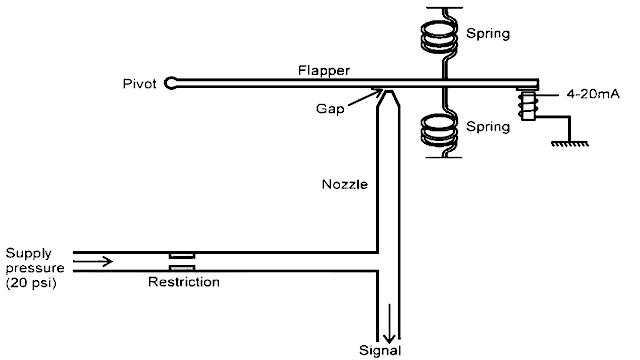
Working Principle of Flapper Nozzle Flapper Nozzle  Essentially, the flapper-nozzle is a fundamental component of pneumatic measurement, control and transmission systems, and the flapper-nozzle acts as a pneumatic secondary transducer, translating very small displacements into a pressure signal. It is a movable flat metal and is attached to the member whose displacement is to be detected. And it is placed in front of the nozzles in such a way as to cover or expose the nozzles and change the distance between them when moved. When the flapper is moved towards the nozzle, the distance between the nozzle and the flapper decreases. This increases the resistance to air escaping through the nozzle and also increases the pressure behind the nozzle. Once the flapper completely covers the nozzle, no air flows through the nozzle. Nozzle back pressure is maximum and same as supply air pressure. When the flapper is moved away from the nozzle, the distance between the nozzle and the flapper incr...

Characteristics of Measurement

Characteristics of Measurement Essentially the instruments used for measurement have  characteristics such as accuracy, repeatability, sensitivity, display. Accuracy   Basically, accuracy is defined as the difference between the instrument's reading and its actual reading or measured value. and is expressed as a percentage of the top scale value regardless of where the scale reading is taken. Repeatability   The repeatability of an instrument means that the instrument will give the same reading on the scale regardless of how the measurement point is reached. It means fast or slow, high or low. If the instrument reads 49 instead of 50 on the upper scale, it should read the same on the downscale reading. If it reads 51 units, the error is called hysteresis, which is caused by frictional losses. Sensitivity   Sensitivity of an instrument is its ability to respond to a small change in the value being measured. This is the smallest change that will result in effective mot...

What is Integrated Circuit?

What is Integrated Circuit?  Basically an integrated circuit is a small chip or micro chip and this chip contains diodes, resistors, capacitors and transistors. And these act as amplifiers, counters, oscillators, timers, computer memories or microprocessors. Two types of ICs are analog ICs and digital ICs.

What is HMI?

What is HMI?  Basically HMI is known as human machine interface and it allows human to give direction as well as receive feedback from PLC. The HMI screen displays various types of indications and these indications are used to identify problems in process or instrument status such as on, off, feedback error and feedback error.  

Analytical Instrumentation MCQ

Analytical Instrumentation  MCQ 1. Lambert’s law states that the intensity of light decreases with respect to __________ a) Concentration b) Distance c) Composition d) Volume Answer: Distance 2. Beer’s law states that the intensity of light decreases with respect to ___________ a) Concentration b) Distance c) Composition d) Volume Answer: Concentration 3. Which of the following detectors does not require a battery and is also known as barrier layer cell? a) Photomultiplier tube b) Photovoltaic cell c) Photoemissive tubes d) Photo reflector Answer: Photovoltaic cell 4. Which of the following is not a type of Spectroscopy? a) Gamma ray b) X ray c) Nuclear magnetic resonance d) Sound Answer: Sound 5. How is Tungsten Halogen lamp differs from normal Tungsten filament lamp used in absorption spectroscopy? a) It has a tungsten filament and is filled with inert gas b) Iodine is added to normal filling gas c) Iodine is coated on tungsten filament d) Iodine is added to inert gas Answer: Iod...

Level Sensors and it's applications

Level Sensors  Basically level sensors are used to measure as well as detect the level of liquids or liquids. And level sensor is divided into several categories some commonly used level sensors are reflex level sensor, tank level sensor, bi-color level sensor, transparent level sensor. What are the applications of level sensors?   Commonly level sensors are used in many industries  Beverage and food manufacturing plants  Oil production plants  Pharmaceutical industry  Paper and Pulp Manufacturing Industry  Power Generating Plants  Petrochemical industry  Chemical industry  Water treatment plant  Waste Material Handling Industry

P&ID Symbols

P&ID Symbols PC = Pressure Controller PI = Pressure Indicator PR = Pressure Recorder  PIC = Pressure Indicating Controller  PRC = Pressure Recording Controller  PSV = Pressure Safety Valve PT = Pressure Transmitter RV = Relief valve LA = Level Alarm LAH = Level Alarm High LAL = Level Alarm Low LC = Level Controller LG = Level Glass LI = Level Indicator LIC = Level Indicating Controller LRC = Level recording Controller FC = Flow Controller  FE = Flow Element  FA = Flow Alarm FE = Flow Element FI = Flow Indicator FR = Flow Recorder FRC = Flow recorder Controller FIC = Flow Indicator Controller LC = Level Control LG = Level Gauge LA = Level Alarm LAH = Level Alarm High LAHH = Level Alarm High High LI = Level Indicator LIC = Level Indicator Controller TA = Temperature Alarm TI = Temperature Indicator TR = Temperature recorder TRC = Temperature recorder Controller TW = Temperature Well TY = Temperature Relay TW = Thermowell HCV = Hand Control Valve SDV = Shut Dow...

What is the use of pressure switch?

What is the use of pressure switch?  A pressure switch is used to detect low pressure condition or high pressure condition.

Hydrostatic Pressure

Hydrostatic Pressure What is hydrostatic pressure and how to calculate it? Basically, hydrostatic pressure is the pressure of a fluid in equilibrium at any time due to the force of gravity. Generally liquids and gases exert equal pressure on all sides of the container. The normal force exerted by a fluid per unit area of ​​contact surface is called hydrostatic pressure, and hydrostatic pressure is mathematically called p = ρgh p = Pressure exerted by the fluid in N.m-2 or Pa ρ = Density of the liquid in kg.m-3, slugs.ft-3 g = Acceleration due to gravity taken as 9.81m.s-2 h = Height of the liquid column in m The SI unit of hydrostatic pressure is Newton/Meter 2  (N/M 2 ) = Pascal

Variable Frequency Drive

Variable Frequency Drive  Basically, variable frequency drive is also known as AC drive as well as variable speed drive (VSD). And it is commonly used in industry because of its low cost. A VFD (Variable Frequency Drive) is a type of motor control that drives an electric motor by varying the frequency and voltage of its power supply. The VFD also has the ability to control the ramp-up and ramp-down of the motor during start or stop respectively. VFD is widely used in industries like food and beverage industry, automotive industry, food industry, chemical industry, textile industry, paper industry, wood industry, metal industry. Applications of Variable Frequency Drives   VFDs are used for different types of machines like Boring / Cutting Machine Grinder  Crunchers Mixer  Conveyors  Wind tunnels  Pump  Fans 

Control Valve Interview Questions and Answers

Image
Control Valve Interview Questions and Answers Q. What is a control valve? The control valve is the final component that directly changes the value of the manipulated variable by changing the rate of flow of the control agent. A control valve is a consists of an the operator and the valve body. The operator provides the power to change the position of the valve plug inside the body. The plug is connected to the operator by a stem, which slides through the stuffing box. An air signal from the controller is applied above the diaphragm. An increasing air signal from the controller is applied above the diaphragm. The rising air signal will push down the operator's stem against the force exerted by the spring on the diaphragm plate. The valve is adjusted so that the plug starts moving when 3 psi is applied to the diaphragm and touches the seat when 15 psi is applied to the diaphragm. As the air pressure increases, the valve will close. So the house "want to close". Another...

Instruments

Image
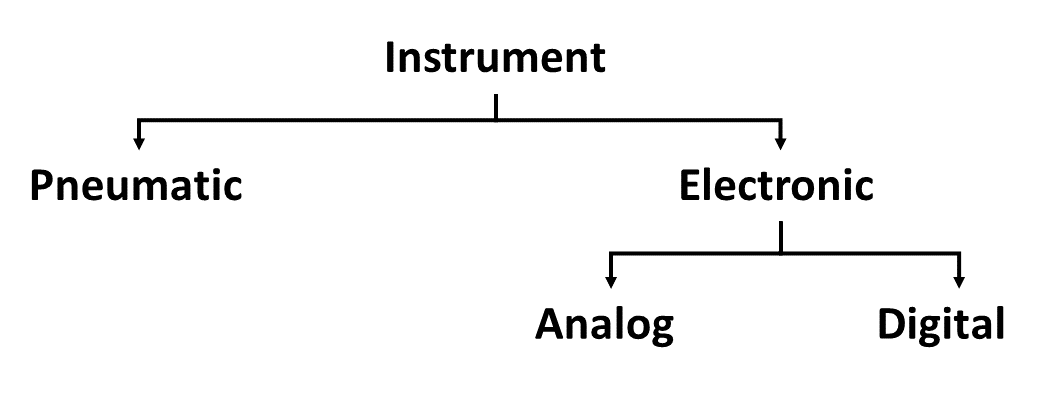
Instruments Basically an instrument is a man made device which is used to measure a parameter of a physical variable. And it is variable analog as well as digital or a combination of digital and analog. Generally most industrial instrument is digital because digital instrument has more advantages compared to analog instrument . But in most cases the front end instrument is still analog and most signals from sensors or transducers are analog . Most sensors have the form of a chip and this smart sensor is directly connected or digital devices. The most basic and elementary components in all devices are sensors and transducers. Basically these outputs are current, voltage and power or amplitude, frequency or phase difference of energy. And all devices operate on signals. A signal is detected by a sensor from physical phenomena. The difference between analog and digital instruments is signal processing, and it requires different theoretical approaches and hardware. You may also like this: ...

Control System

Control System Control System Questions and Answers Q. What is the tuning of controllers? Tuning basically involves proportional adjustment. Integral and derivative parameters to get better control. The gain, time constant and dead times around the loop will determine the settings of various parameters of the controller. Q. What is the proportional control only? Proportional control attempts to return the measurement to the set point after the load is upset. It is however impossible for a standard controller to return measurements to a fixed point. You may also like this:   Control System Simulation Q. What is the use of proportional control only? It is commonly used for level control. It reduces the effect of load change but cannot eliminate it. Q. What is proportional plus reset control? A reset action is initiated to remove the offset. It will integrate the difference between the measurement and the set point and change the output of the controller until the difference between t...